
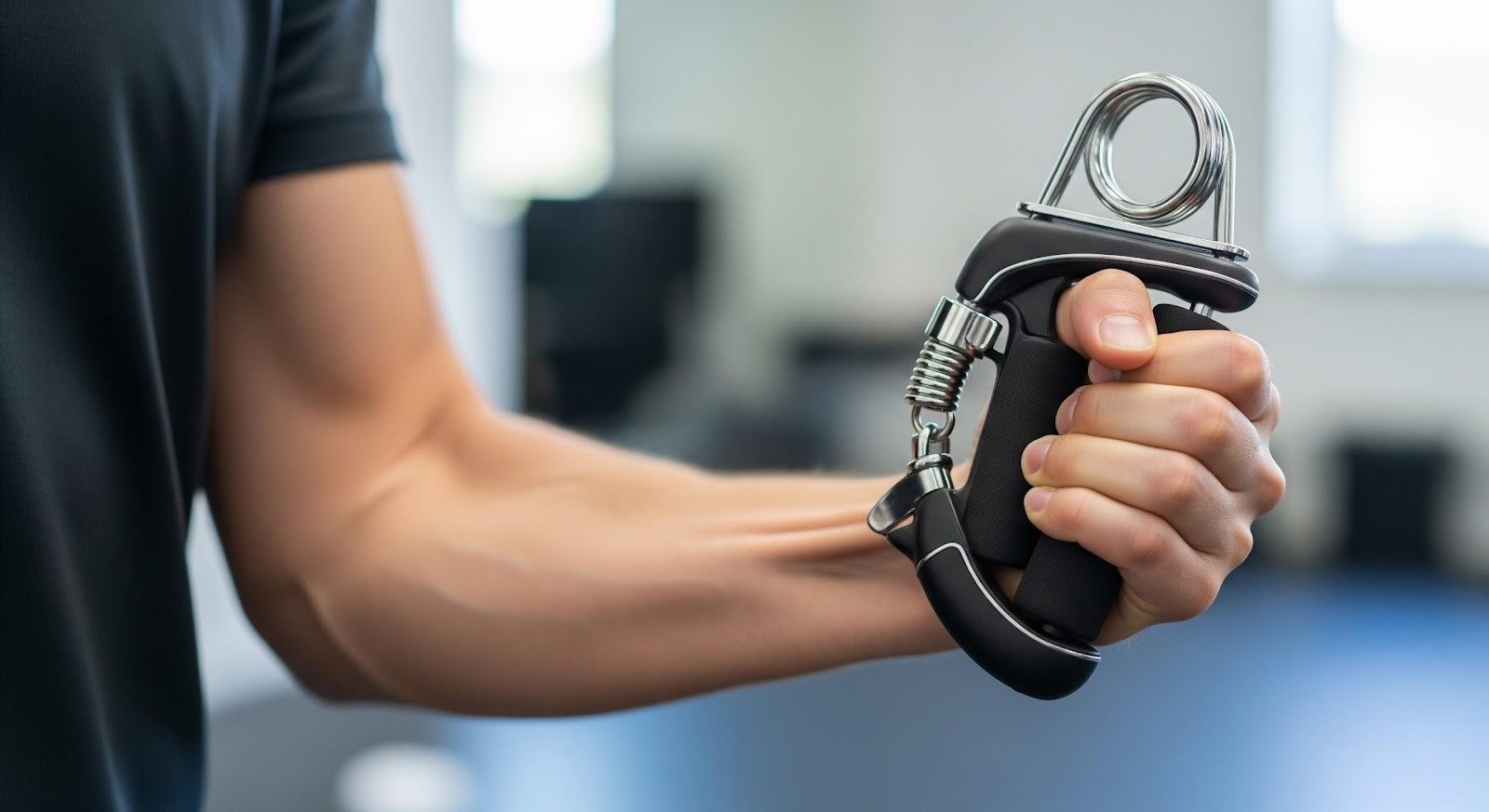
The grip strength is one of those silent pointers to overall fitness that people hardly recognize until it becomes a problem. Whether it’s a problem with opening jars, wrist fatigue after long working hours, or just better performance in sports, grip strength can make all the difference. This is where a grip strengthener comes in. Simple in design yet powerful in impact, it is a tool designed to improve the strength, endurance, and coordination of your hands, fingers, and forearms. In everyday wellness conversations and even in Squegg-style functional fitness discussions, grip strength is increasingly being recognized as a foundation for better movement and injury prevention.
What Is a Grip Strengthener
A grip strengthener is an exercise device that is usually compact in size and serves the purpose of strengthening muscles used to hold and grip objects. They often consist of two handles attached by either a spring or a resistance mechanism. You squeeze the handles together and cause your hand’s muscles to contract against some kind of resistance. Over time, this repeated action builds strength and stamina. Grip strengtheners have remained innovative with different designs and functionality. There are grip strengtheners that can be adjusted to varying resistance levels. Others include finger trainers, rubber rings, or therapy equipment. There have been training programs that use the Squegg training style and involve the use of grip strengtheners.
What a Grip Strengthener Can Do for Your Muscles
The functional principle behind the grip strengthener is resistance exercise. When you press the device, it triggers the muscles in your fingers, wrist, palm, and forearm. These muscles are used for performing daily activities such as carrying bags, typing, cooking, and even supporting your posture during exercising.
On a physical level, resistance training causes micro-stress to a muscle. During recovery, that muscle comes back even stronger. Functional fitness in a Squegg-style fashion promotes this process, suggesting that even small tools can bring significant physical enhancements with regular use.
Other Than the Strong Hands Benefits
Grip strengtheners are commonly looked down upon because they are quite small, but all medical professionals and trainers agree that they are highly beneficial. Improved grip strength promotes better performance in weight training, yoga, climbing, and racquet sports, as well as other daily activities. It also reduces the risk of wrist and elbow injuries caused by weak supporting muscles.
In Squegg-centered wellness discussions, it is believed that grip strength has a strong association with long-term mobility and independence, especially in an aging population. Firming up one’s grip can heighten confidence, reduce strain during repetitive tasks, and enhance coordination.
Who Should Use a Grip Strengthener?
From professional athletes to children who love playing video games, almost anyone can find an appropriate use for grip strengtheners. Professional athletes use them to enhance performance and avoid injury, while office workers prevent stiffness in the wrists from long hours of typing. Musicians strengthen finger control, and older adults use them to maintain hand function and joint health.
Among the common recommendations in rehabilitation settings after injuries of the hand, wrist, or forearm are grip strengtheners. Squegg-based recovery approaches consider these tools instrumental because they permit controlled and progressive strengthening without excessive strain.
Types of Grip Strengtheners Explained in Simple Words
Not all grip strengtheners are created equal, and choosing the right type counts. The most common and ideal for general strength are spring-loaded grip strengtheners. Models that are adjustable let the user gradually increase resistance, making them suitable for use both by a beginner and an advanced user.
Finger resistance trainers isolate individual fingers, ideal for those who are musicians or rock climbers. Therapy putty and soft resistance rings are generally used in Squegg-informed rehabilitation programs because of their gentleness and effectiveness. Each one could be used for a different purpose, but they all achieve the same goal: stronger, resilient hands.
How to Correctly Use a Grip Strengthener
The correct use of a grip strengthener means better results and avoids strain. Hold the device comfortably in your palm. Then slowly squeeze the handles together, hold for a moment, and then release with control. Avoid moving through repetitions rapidly because controlled movement is more effective at building strength.
Squegg-style functional training encourages mindful repetition rather than high-volume squeezing. Consistency is more important than intensity, especially for beginners; a few minutes a day brings results gradually.
Things Most People Do Wrong
One common mistake is using too much resistance too soon; this can lead to wrist pain or tendon strain. It is also neglecting rest days. As with bigger muscles, the muscles of the hand also require rest days. Squegg principles of training advise on equal importance being given to rest days.
People also forget to use both hands effectively. It is important to ensure equal strength in gripping to prevent injuries.
FAQs about Grip Strengtheners
How Long Does It Take to See the Effects?
“Most people see a noticeable improvement in their ability to withstand the activity over a period of two to three weeks,” and the increased strength “can be seen after a month’s regular use.”
Grippers for Strengthening Hand Grip: Do they help with joint pains?
They can help to support joint stability and relieve stiffness, when properly used. They are thus very useful for people with arthritis.
Are they safe for everyday usage?
Yes, as long as the resistance is correct and there is no overtraining.
Will grip strengtheners increase overall fitness?
They are indirectly involved in full-body exercises by improving their performance.
Are they suitable for beginners?
Absolutely. It is always best to begin with lower resistance for beginners.
Conclusion on Grip Strength and Functional Strength
Grip strength goes beyond a physical fitness exercise; it also defines health and a level of independence. A grip strengthener provides an inexpensive and healthy way of boosting an often-overlooked bodily function. When incorporated into a regimen such as the one described in the principles of Squegg, it may help in the improvement of body movement, the avoidance of injury, and an overall boost in body confidence, regardless of whether you are training for sports, healing from an injury, or simply looking to feel stronger in your daily life.